Akintola Defends Ibadan Chieftaincy System, Links Law With Culture, Clarifies Olubadan-in-Council Structure

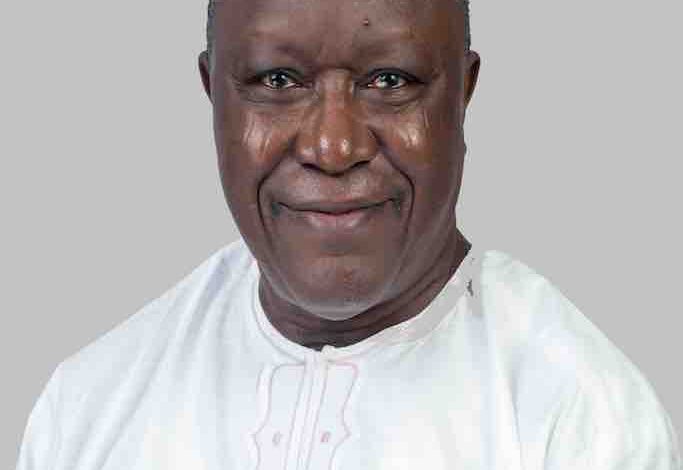
Akintola Defends Ibadan Chieftaincy System, Links Law With Culture, Clarifies Olubadan-in-Council Structure
Legal luminary, Chief Niyi Akintola SAN, has said that one of the major problems confronting Nigeria is ignorance and lack of knowledge, stressing that many public controversies arise from poor understanding of law and culture.
Speaking on Sabenko, a programme on Eagle 102.5 FM, Ilese-Ijebu, Ogun State, Akintola reiterated that “ignorance continues to be a major challenge in national discourse, especially on law, culture, and traditional institutions.”
He stated that “one of the things disturbing the country is ignorance and lack of knowledge, and who lacks wisdom will have problems,” adding that societal disputes often stem from misinformation and incomplete understanding of legal principles.
Akintola maintained that law does not oppose culture but rather strengthens it, saying that “law does not disturb culture rather it strengthens it.” He added that “each person has his own level of knowledge, and one of the problems we have in Nigeria is that some people believe what they do not know does not exist, not knowing that law and culture do not oppose each other.”
He further explained that bad cultural practices such as those involving killings are often wrongly upheld by some people, while positive cultural values are ignored. He said “bad cultures like those involving killing are the ones people uphold in society, but they often ignore the good ones.”
Akintola stressed that law must align with the culture of the people to be effective, stating that “the law we make that does not align with the people’s culture cannot exist.” He added that “law can only be enforced if it aligns with the people’s culture.”
IBADAN CHIEFTAINCY STRUCTURE AND HISTORICAL CONTEXT
The SAN addressed widespread misconceptions about Ibadan traditional institutions, noting that many people are ignorant of its historical and structural foundation.
He explained that before Nigeria’s independence, what is now Osun State, apart from Ilesa and Ile-Ife, was under the Ibadan District Council.
He said that in 1955, late Awolowo established Osun Division, Remo Division under Ijebu-Ode, and Egbado Division, adding that “each of these provinces were later used to create states, and all of these divisions, aside from Ilesa and Ile-Ife, were under Mogaji Ibadan traditional authority.”
Akintola further stated that after returning from overseas, Arowolo initiated a case involving Laoye against Olubadan-in-Council, questioning chieftaincy legitimacy.
He explained that Laoye, who is from Ede, attempted to become Mogaji of Ibadan, and even his grandson Ali iwo also sought to become Mogaji and Olubadan. He said “different Obas used to migrate to Ibadan to become Mogaji,” noting that such practices led to confusion in the system.
He added that even about five individuals from Ogbomoso have at different times been conferred the title of Olubadan.
Akintola explained that in Ibadan chieftaincy structure, aside from the Olubadan and Iyalode, there are 11 high chiefs who operate under the Mogaji system.
He further clarified that once a person enters the Olubadan-in-Council, “you become a public officer and you will be collecting salary from the government.”
He said when Ibadan elders noticed that chiefs under their hierarchy were beginning to call themselves Obas, they held meetings and even consulted the late Awujale of ijebuland for advice, adding that “the present Ibadan palace is a replica of the Awujale palace.”
*REFORMS, POLITICAL INTERVENTION AND GOVERNMENT ACTIONS*
Akintola recalled that in 2007, Adedibu, and the present Olubadan were told they would not be part of the Olubadan-in-Council if they engaged in politics.
He said “all Ibadan elites were present at the meeting, and the Olubadan said he would not do politics,” noting that the meeting was convened by late Aare Azeez Arisekola Alao.
He explained that Ibadan elites later demanded reforms of the chieftaincy constitution, which was approved under former Governor Abiola Ajimobi, who signed the amendment into law based on public demand.
Akintola added that when Governor Seyi Makinde came into office, he enforced the same law.
He said under Section 20 of the Oyo State Chieftaincy Law, “if you enter the council, the Olubadan will present the person to the governor, and it is only the governor that can crown such person based on recommendation of the Olubadan.”
He dismissed rumours that recent appointments were solely the decision of the governor, insisting that “it is the Olubadan that wrote the letter of recommendation to Governor Seyi Makinde.”
He further explained that out of the affected individuals, one had earlier written a petition claiming they had already been crowned under Section 20 provisions.
*ON ABSENCE AT CEREMONY AND PUBLIC MISCONCEPTIONS*
Addressing concerns about absence of newly appointed chiefs during the ceremony, Akintola said such expectations were misplaced, asking rhetorically that “do civil servants present themselves when they are promoted?”
He explained that promotions and traditional elevations follow structured procedures, adding that “this is like civil service promotion, but ignorant people decided to carry rumours because they do not read and are not informed.”
He described such narratives as misinformation driven by ignorance.
*ON POLITICAL OFFICE AND TRADITIONAL TITLES*
On whether appointed Obas can hold political office, Akintola said “it is only the court that can decide that,” noting that similar cases in Nigeria have seen professionals resign before ascending thrones.
He cited examples including individuals who resigned from engineering positions before becoming traditional rulers such as the Alafin, as well as similar practices involving the Sultan of Sokoto.
IBADAN STRUCTURE AND COMPARATIVE AUTHORITY
He explained that Ibadan has 33 towns, and the high chiefs perform essential administrative and traditional duties across these areas.
He said the Olubadan remains the paramount ruler, adding that “just like the King of England who has dukes under him, the Olubadan system is hierarchical and structured.”
He stressed that there is no crisis between the governor and the Olubadan, describing any such claims as false.
You can get every of our news as soon as they drop on WhatsApp ...To get all news updates, Join our WhatsApp Group (Click Here)